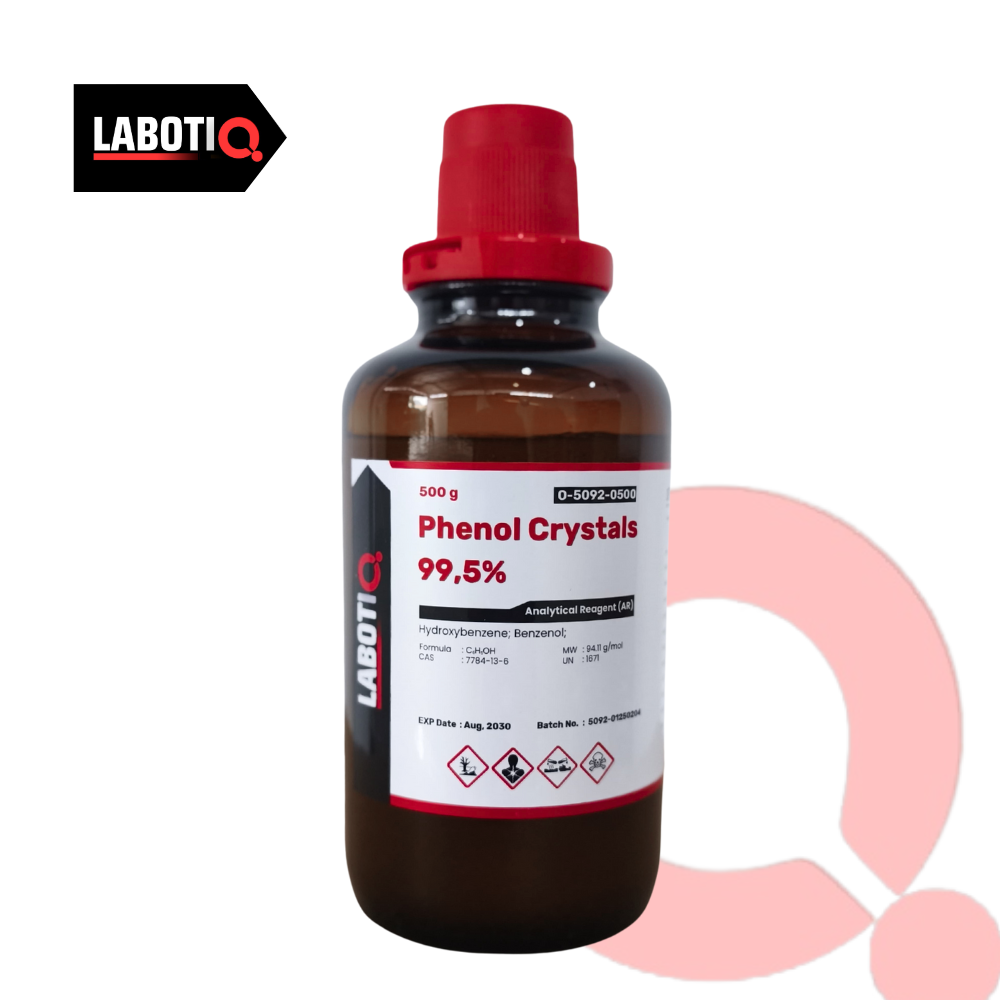
The major uses of phenol, consuming two thirds of its production, involve its conversion to precursors for plastics. Condensation with acetone gives bisphenol-A, a key precursor to polycarbonates and epoxide resins. Condensation of phenol, alkylphenols or diphenols with formaldehyde gives phenolic resins, a famous example of which is Bakelite. Partial hydrogenation of phenol gives cyclohexanone, a precursor to nylon. Nonionic detergents are produced by alkylation of phenol to give the alkylphenols, e.g., nonylphenol, which are then subjected to ethoxylation.
Phenol is also a versatile precursor to a large collection of drugs, most notably aspirin but also many herbicides and pharmaceutical drugs. Phenol is a component in liquid–liquid phenol–chloroform extraction technique used in molecular biology for obtaining nucleic acids from tissues or cell culture samples. Depending on the pH of the solution either DNA or RNA can be extracted.
TINDAKAN PENCEGAHAN UNTUK PENANGANAN YANG AMAN
a. Saran tentang penanganan yang aman
Kenakan pakaian pelindung. Jangan menghirup zat/campuran.
b. Saran tentang perlindungan terhadap kebakaran dan ledakan
Jauhkan dari api terbuka, permukaan panas, dan sumber api.
Ambil tindakan pencegahan terhadap pelepasan muatan statis
c. Tindakan kebersihan
Segera ganti pakaian yang terkontaminasi. Gunakan pelindung kulit untuk pencegahan. Cuci tangan dan wajah setelah bekerja dengan bahan tersebut. Untuk tindakan pencegahan, lihat bagian 2.2 dalam SDS.
KONDISI PENYIMPANAN YANG AMAN, TERMASUK KETIDAKCOCOKAN
a. Kondisi penyimpanan
Tutup rapat. Keringkan. Simpan di tempat yang berventilasi baik.
Simpan di tempat terkunci atau di area yang hanya dapat diakses oleh orang yang berkualifikasi atau berwenang. Tangani dan simpan di bawah gas inert. Peka terhadap cahaya.
Suhu penyimpanan : Rekomendasi suhu penyimpanan lihat dalam label
b. Kelas penyimpanan
Kelas penyimpanan (TRGS 510): 6.1A: Mudah terbakar, bahan berbahaya beracun akut Kategori 1 dan 2 / bahan berbahaya sangat beracun.

Your orders are shipped seamlessly between countries

Your orders are shipped seamlessly between countries

You have the right to return your orders within 30 days.

0251-8359110 (Call)
+62 813 1689 4650 (WA)
+62 8953 6506 8181 (WA)
Webdeveloper.id menyediakan Powered by jasa pembuatan website professional Webdeveloper.id